

A message of grace, of forgiveness, of restoration, and of acceptance.
Transcript
This is the full text of Ken's devotional, read aloud in the episode above.
Tax collectors and other notorious sinners often came to listen to Jesus teach.(1) The Pharisees and their scribes continually criticized Jesus because He was associating with “such sinful people” — even eating with them! The religious leaders were functioning under the false belief that there is a hierarchy of sin – dividing “acceptable” sins from those that proper Jewish society would have deemed to be “unacceptable”. They would have identified “notorious sinners” as people who led conspicuously immoral lives and/or engaged in highly questionable occupations.
But it also would have included people with certain diseases or disabilities that were perceived to be a sign of some great sin. This group would have been physically and morally unapproachable by these religious leaders. Tax collectors were generally hated and despised by their fellow countrymen. Therefore they would have also been considered to be a part of this larger group. No “respectable” Jew would have had anything to do with this collection of “notorious sinners”. The Pharisees viewed this group as being “beyond saving” and viewed themselves as not being in need of saving. Sadly, the Pharisees never saw themselves as being among the lost.
More books by Ken Winter Added by the site team
-

Possessing The Promise
The day had finally arrived for the Israelites to possess the land that God had promised.
See the book -

Until He Returns
The sixth and final book in the series released on Friday, January 17, 2020 , on the 16th anniversary of the day that…
See the book -

The Journey Begins
God's plan for our lives is not static; He is continuously calling us to draw closer, to climb higher and to move…
See the book -
Through the Eyes of a Spy
Caleb was one of God’s chosen people — a people to whom He had given a promise.
See the book -
A Prophet Called Isaiah
Most of us know the messages delivered by the prophet Isaiah, but do we know the story behind the man?
See the book -
Through the Eyes of a Shepherd
Shimon was a shepherd boy when he first saw the newborn King in a Bethlehem stable.
See the book
This idea of “acceptable” sins is not unique to the scribes and Pharisees. i believe that we in the church today often function under a similar system of ranking sin. For example, if we were asked about the sins of murder, sexual immorality, stealing or drunkenness, we would tend to agree that these egregious sins are “unacceptable”. But what about the sins of gossip, creating strife, covetousness or gluttony? We might tend to view these as less egregious sins and therefore as “more acceptable”. i would agree those sins are more prevalent – even within the church – but that doesn’t make them more acceptable!
Scripture teaches that the “wages” of ALL sin is death,(2) and ALL of us have sinned and fallen short.(3) My point is that all of us are sinners in need of a Savior! The Pharisees were taking a position that the tax collectors and “notorious sinners” did not deserve the attention of Jesus – and how could anyone who was righteous associate with them! i, for one, am grateful that Jesus came to seek and save sinners! For i am counted among them!
It’s also important to note that throughout the Gospels that repentant sinners were continuously drawn to Jesus. Not because He catered to them, or compromised on truth, but because He genuinely cared for them, and welcomed them. Whereas the religious leaders treated them as outcasts. It is important that we in the church consider how are we viewed by our world today? Do our words and actions reflect those of Jesus . . . or those of the Pharisees?
Jesus spoke three parables in response to the accusations being made by the Pharisees and their scribes: the parables of the lost sheep, the lost coin, and the lost son.(4) He was clearly communicating the message of salvation: God welcomes and forgives repentant sinners. God is seeking and searching just as the shepherd seeks out the lost sheep and the woman searches for the lost coin. But there is also our part in salvation. The lost son willingly repented and returned to his father.
The fact that the shepherd goes out to seek one lost sheep and the woman searches for her one lost coin is a reflection of the truth that our Lord “does not want anyone to be destroyed, but wants everyone to repent.”(5) He seeks and searches for every last one! And the heavens rejoice “when even one sinner repents.”(6)
More books by Ken Winter Added by the site team
-

The Wandering Years
Why did a journey that God ordained to take slightly longer than one year, end up taking forty years?
See the book -

A Belated Discovery
Embark on a gripping journey alongside nineteen-year-old Bobby Fearsithe, whose unwavering determination mirrors that…
See the book -

Taking Up The Cross
What does it mean to take up the cross?
See the book -

A Merchant Called Lydia
Lydia was a successful merchant who sold her goods to the wealthy and elite of her day.
See the book -

A Friend Called Enoch
Most of the descendants of Adam turned their hearts away from their Creator and did evil in His sight.
See the book -
A Teacher Called Nicodemus
In a day when most religious leaders were known for their efforts to discredit the ministry of Jesus, there came one…
See the book
In the parable of the lost son, we see two beautiful pictures: one of repentance, and the other of acceptance. The rebellious son comes to the end of himself – and realizes how far he has fallen. He knows that his selfish way has led to failure and destruction. He has exhausted everything that the world has to offer and has been left empty and broken – lying in a pig sty. He literally has hit bottom and knows that there is only one choice. He can continue to languish in his filth or he can seek his father’s forgiveness.
Having gone as far as he can on the path away from his father, he makes a 180-degree turn back toward his father. That’s the picture of repentance:
coming face-to-face with the reality of our sin,
lamenting over our sin and its effects on ourselves, on others and on God,
confessing it to ourselves, to those we have wronged, and to God,
acknowledging that we are powerless over our sin and cannot change ourselves, and
making a 180-degree turn toward God.
As we turn toward God, He is there to meet us and accept us with arms out-stretched wide to receive us, to forgive us and to restore us into right relationship with Him as His child. Picture the son’s rags being exchanged for a fine robe, his once filthy feet now being cradled in his father’s sandals, and the signet ring on his finger showing that he has been restored. Then he enters into a banquet announcing to the world and celebrating his return.
What a gift! Jesus is extending that very same gift of forgiveness and restoration to “notorious sinners” like me… and you. With none too sinful to receive it, as long as we are not too hard-hearted or proud to accept it!
That is not only a life-changing message to receive, it’s also a life-changing message we must share – a message of grace, of forgiveness, of restoration, and of acceptance. The lost are waiting to be found!
More books by Ken Winter Added by the site team
-

Walking With The Master
Our daily walk with the Master is never stationary.
See the book -
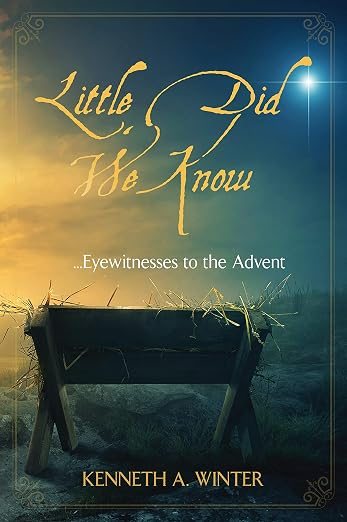
Little Did We Know
A collection of twenty-five short stories for the Advent season from some familiar and some not-so-familiar people.
See the book -
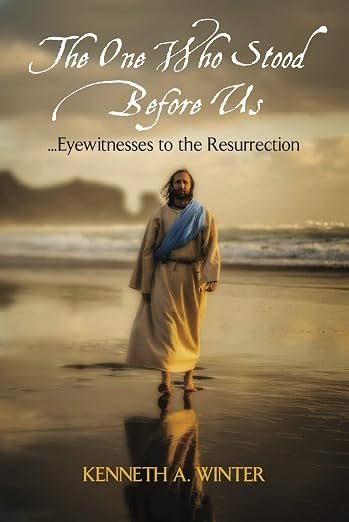
The One Who Stood Before Us
Introducing the two newest books in “The Eyewitnesses” collection — short stories from men, women and children who…
See the book -

A Judge Called Deborah
In a day when the culture dictated that women were to be seen and not heard, God raised up a woman with the faith,…
See the book -

Through the Eyes of a Prisoner
NOW AVAILABLE: Introducing the newest novel in the Through the Eyes series.
See the book -

A Follower Called Mark
In the heart of ancient Jerusalem, there lived an ordinary follower whose journey was anything but ordinary .
See the book
This week, i am releasing the Kindle edition of the first novel in my newest series, The Parables. Each of the stories is a 20th Century telling of one of Jesus’s parables. This first book in the series, entitled An Elusive Pursuit, follows the journey of a young man who leaves his family and home behind in order to pursue an elusive dream—only to discover it was within his reach all the time. i invite you to join him on the twists and turns of his journey. (Information about how you can obtain a copy of the book in hardcover, paperback, large print, and for your Kindle or Kindle app is available by clicking here.)
You can read about all three parables in this post in the Gospel of Luke, chapter 15.
The post is taken from chapter 53 of my book, Walking With The Master. For more information about the book, click here.
(1) Luke 15:1-2
(2) Romans 6:23
(3) Romans 3:23
(4) Luke 15:3-31
(5) 2 Peter 3:9 (NLT)
(6) Luke 15:10 (NLT)
Copyright © 2023 Kenneth A. Winter All rights reserved.
Photo by Kevin Carden on Lightstock